How to Make Lacto-Fermented Vegetables
Ali Segersten 128 comments
Lacto-fermented vegetables are cultured vegetables. You've probably heard of sauerkraut, kim chi, and sour dill pickles, right? These are all forms of lacto-fermentation. Many people use whey as a starter but it is not necessary as long as you use enough salt. Making your own lacto-fermented vegetables is so easy that once you start you'll be hooked!
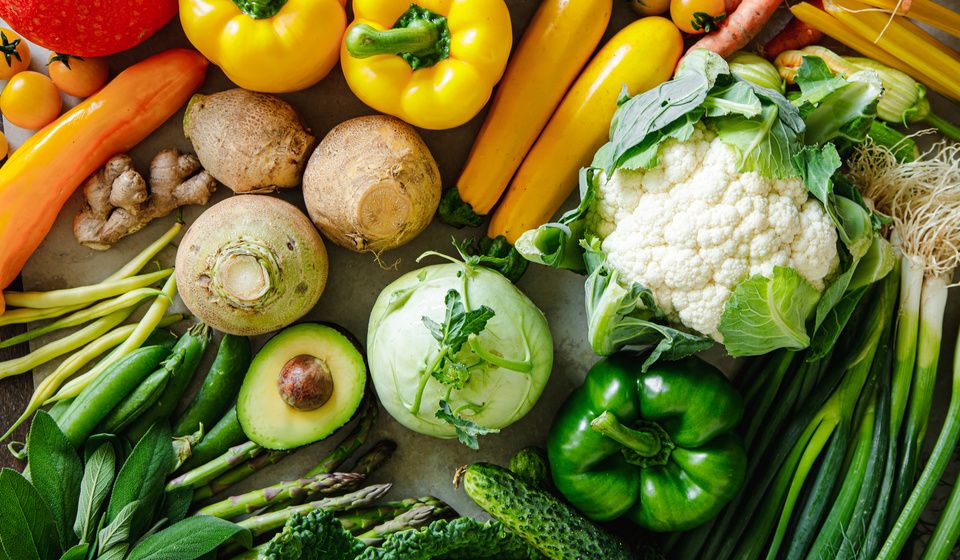
Traditionally, lacto-fermentation was used to preserve the harvest and store vegetables for the winter. If you have a garden full of cabbage, cauliflower, beets, carrots, and green beans and don't know how to store them all, consider making a few batches of lacto-fermented vegetables. These veggies can be stored in your refrigerator for months....if they last that long!
Lacto-fermented vegetables provide a viable source of beneficial microbes to help heal and maintain a healthy gut. These beneficial microorganisms attach to receptors in our guts that send a signal to the immune system that says everything is okay, no need to overreact to foods and other things entering the gut, let's keep everything calm. If you are dealing with multiple food sensitivities, chances are your gut is out of balance and is in need of a daily dose of beneficial microorganisms. These crispy, sour, salty vegetables are highly addicting and an easy, economical way to help maintain a healthy gut. These vegetables are also important to include daily if you are following an Elimination Diet.
Use your lacto-fermented vegetables to top cooked quinoa, beans, and chopped leafy greens. Serve them atop grilled fish or chicken. Serve them with scrambled eggs for breakfast. Serve them as an appetizer for a holiday meal. I like to add them to salmon or chicken salads made with mayonnaise. Just try to restrain yourself from eating the whole jar in one sitting....it may be a little too much salt all at once! You can also whisk some of the leftover brine with olive oil, a squirt of dijon mustard, and a dash of honey for a delicious probiotic salad dressing!
Ready to bring more probiotic power into your meals?
Inside our Nourishing Meals® membership, you’ll find a beautiful collection of fermented vegetable recipes—along with the tools to make them part of your daily rhythm. Save your favorites, add them to a personalized meal plan, and instantly generate grocery lists to simplify your week.
✨ Let food be your daily medicine—organized, inspired, and deeply healing.
Basic Lacto-Fermented Vegetables

Lacto-fermented vegetables can be made with different combinations of fresh vegetables and herbs creating a wide variety of flavor profiles. I have tried using a salt brine made up from anywhere between 1 to 2 tablespoons of sea salt per 2 cups of water and found that 2 tablespoons is too salty and slows down fermentation too much, so use anywhere between 1 and 1 ½ tablespoons. I prefer to use Redmond Real Salt for lacto-fermentation, however, sea salt or pink Himalayan salt work well too! It is very important that you use filtered water for all fermentation. Chlorine in water is great for keeping our water supply clean but not so good for allowing beneficial bacteria to grow during the lacto-fermentation process.
You'll need a glass quart jar with a lid, though there are many different types of fermentation lids you can use to help release the gasses. Latch lid jars also work quite well, however, they produce a strong seal so you need to be sure to "burp" them once or twice a day during the height of the fermentation process otherwise they run the risk of cracking as pressure builds up. An airlock lid screwed onto a mason jar is the easiest method for beginners. I highly recommend using these if you are unaccustomed to fermenting vegetables.
Brine
Any Combination of Fresh Vegetables
Any Combination of Herbs and Spices
- First dissolve your sea salt in water in a glass jar or 2-cup glass measure; set aside.
- Then chop up your favorite combination of vegetables, keeping them all relatively the same size. You'll need 3 to 4 cups of raw veggies. Set aside.
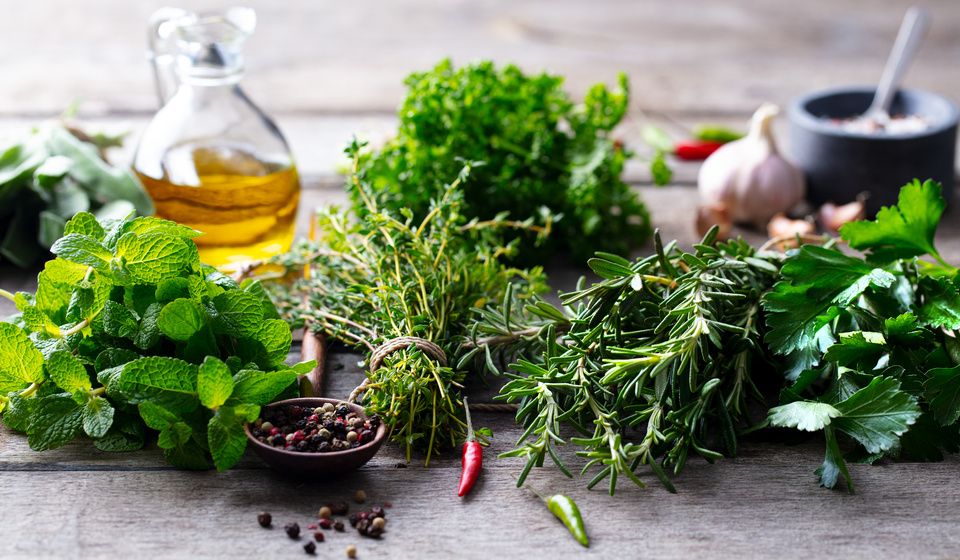
- First place any herb and spice flavorings at the bottom of the jar. This helps to keep them from floating to the top. A teaspoon of whole black peppercorns, a few cloves of chopped garlic, and a handful of fresh dill is my typical flavoring combination.
- Next pack in your chopped raw vegetables into the quart jar (you can use a larger cylindrical jar, ceramic crock, or latch-lid jar instead; just add more veggies and double or triple the salt brine, keeping the same ratio of salt and water). Make sure you leave about an inch of space from the top of the jar.
- Then cover with your salt brine, leaving about an inch to a half inch from the top. Fold a small cabbage leaf and press it into the brine so the water floats above it and the vegetables are completely submerged. Cover with a plastic lid or special fermenting lid (it is best not to use metal as the salt and acids can corrode it, though I have used them occasionally if that is all I have). Screw the lid on tightly.
- Set your jar inside of a baking dish to catch any leaking juices in an undisturbed area of your kitchen and away from direct sunlight. The warmer your location, the faster fermentation will occur.
- After day 2 or 3 begin to "burp" your jars once or twice daily to let excess gasses escape (unless you are using a special fermenting lid). You can do this by unscrewing the lid just enough to hear the gasses release and then quickly tightening it back up. You should see a bit of bubbling and some liquid possibly dripping out after about day three, depending on the heat level in your home.
- You can taste the veggies after about five days to see how soured they are. I prefer to let mine ferment for about 10 to 14 days in the winter and 6 to 7 days in late summer. I have also let them ferment for 3 to 4 weeks, depending on environmental conditions and the size of the vegetables. Finely chopped or shredded vegetables ferment faster, while large slices or pieces of vegetables take longer to ferment due to the amount of substrate available for the bacteria. Just experiment, there is no exact science with fermentation. After your veggies are soured to your liking place the jar (or jars) into your refrigerator where they will store for months.
Use this recipe in our Meal Planner


About the Author
Alissa Segersten, MS, CN
Alissa Segersten, MS, CN, is the founder of Nourishing Meals®, an online meal-planning membership with over 2,000 nourishing recipes and tools to support dietary change and better health. As a functional nutritionist, professional recipe developer, author of The Whole Life Nutrition Cookbook and Nourishing Meals, and co-author of The Elimination Diet, she helps people overcome health challenges through food. A mother of five, Alissa understands the importance of creating nutrient-dense meals for the whole family. Rooted in science and deep nourishment, her work makes healthy eating accessible, empowering thousands to transform their well-being through food.Nourishing Meals Newsletter
Email updates.
Comments
Please can I join?
In reply to Please can I join… by Daphne (visitor)
Hi Daphne,
To become a Nourishing Meals® member you can go to the sign-up page where you can select either the annual or monthly membership option.
Happy cooking! :)
I deal with edema in my lower legs and feet. What other way can I make fermented foods other than salt or whey
best way to peel beets before cutting?
If the cabbage leaf comes above the brine during fermentation is that ok? The bubbles are lifting it up. What do I do?
The bubbles during fermentation lift up my cabbage leaf above the brine. Help? Is it ok for the leaf to be above? What should I do?
The bubbles during fermentation lift up my cabbage leaf above the brine. Help? Is it ok for the leaf to be above? What should I do?
I love that you included an entire video on how to complete the process! I am a very visual learner and appreciate everything I can get in terms of pictures and videos when it comes to cooking. Thank you again for your recipe! Can't wait to try making my own lacto-fermented veggies at home.
Would frozen vegetables do?
Thank you for the old fashion recipe!! Only in America I learned about whey in fermenting vegetables....! LOL
Hi Kelly,
Cloudy brine is perfectly normal. So are you saying that when you open the jar you don't see any bubbles coming up or even the faintest sound of gasses escaping? Sometimes in the winter fermentation can take longer to get going, especially if the temp in your house drops down quite a bit at night. Let it keep fermenting. It might take 2+ weeks, depending on the temp in your house. Start tasting it now...each day you taste the veggies you should notice that they are getting more and more sour as the days pass.
My brine is looking cloudy after 6 days and the jar doesn't "burp" when I try to let the gas that is supposed to be in there out. Did I mess up? Should I toss this batch?
Yum...that sounds like a great combo! :)
Hi Vanessa,
Yes fermented veggies are great for young children. You can start feeding babies a teaspoon of brine on their food to add extra beneficial microbes to their developing guts. At two or three years of age you can start out with a tablespoon full of fermented veggies and work up from there. There are billions of probiotics in every spoonful! My children have all enjoyed fermented veggies from a very young age. I never rationed how much they had and instead let them figure it out what was best for them at any given time. :)
Hi. I would like to ask if fermented veggies and fermented food in general are recommended for small children ( like 2 and a half or 3 years old) or are there any special guidelines for them? If its safe how much is the daily dose for a young child or an adult?
Thanks a lot for your precious help
OMG...are these veggies so good!! I did broccoli, carrots, beets, onion, cauliflower. I only used 1.25 tbl spoons per 2 cups of RO water. I put them on my steamed quinoa with coconut oil and liquid aminos.
Thanks so much for the recipe..
The cabbage leaf is to keep the veggies from floating up out of the brine. They need to stay submerged.
I have a question for an expert. We made sauerkraut several months ago. Using only salt brine. It turned out lovely. However we made a lot and still have it. It has not been refrigerated as we were under the impression it did not need to be. Our first attempt! However, after leaving it sometime unused, we dug into it last night. Skimmed off the top, but yet it smelled terrible. Like smelly cheese. My husband ate it and feels fine the next day. It is still crisp. Is it safe? What caused the smell? Should we have refrigerated it?
This video is super user-friendly!! Thank you - I'm sharing it on my blog today :)
http://allnaturalme.com/win-free-seeds-homemade-pickles-cucumber/
Hi! Love this..Wondering if using WHEY from my whole made greek yogert. How much whey for the quart jar?
Where did you go Ali... ? You were doing fantastic! Is everything ok? If I'm mistaken and there's another pg. Or you've moved ... Please do tell... :)
We have a well. Do I still need filtered water or can I use my well water?
I am new to fermenting and am wondering what happens if I do not "burp" my ferments. I missed this step. Also, I have a film sitting on top of my brine. Is this ok?
Hi Ali,
I just made your lacto-fermented vegetables from your Whole Life Nutrition Cookbook (which is INCREDIBLE by the way!) and had them ferment for about ten days. I put them in the fridge and tasted them about 15 days after I started the batch. They were extremely salty! Will they ferment in the fridge? Or should I take them out and ferment them out of the fridge?
I just wanted to add... THANK YOU for this awsome article. We started making fermented Veggies in the winter of 2013. We are HOOKED! We have made around 6 or so batches of usually 7 or 8 quarts worth. People now ask us to bring them to holiday meals. In all the time we have made these, I have not had any mold, and am just delighted with all the different tastes. Our staple recipe is cabbage, kale, radishes, garlic, red onions, red peppers, shredded carrots, cauliflower and broccoli. The jars look soooo pretty when we set them to begin fermenting. I cannot say THANK YOU enough for sharing your wisdom to help others improve their health.
I don't have any bubbling and it has been 5 days. But i don't havemold either. The vegetables are still crunchy so i will let it go another 5 days. Marie, what recipe did you use? I used the one from their new cookbook and it doesn't call for salt water to be added. This was a bit confusing. Is your top cabbage leaf submerged?
Tried second time and after 5 days no bubbling, only white mold on the top. What am I doing wrong.
Today I made cultured vegetables for the first time. I have been intimidated by this process until now. I have 2 questions: the cabbage leaf seems to have risen above the juice and there is an air pocket above the leaf. Is this ok? The 2nd jar didnt fill completely, maybe 3/4. Is this ok? Thanks for your help.
I'm very interested in trying this! Thank you for the video! I do have one question.....after it's done fermenting....do you take out the brine water, or leave it in until all the veggies are gone?
When talking with people before about cultured foods, they mention only starting with a tiny bit - a teaspoon or so - and increasing from there. Yet I noticed that you never mentioned anything along these lines in the post. Is there a reason for this?
I am wondering if anyone can answer my question about what went wrong. The last few batches have been fine. I made fermented veggies (carrots, cabbage, beets) and used Himalayan salt instead of sea salt like I usually do. I followed my standard procedure: chop veggies, fill jars, fold cabbage leaves on top, add salt water, gently screw on lids and let sit on top of the fridge (this batch was 6-8 days).
This time instead of being pleasantly tangy it has an old, gone bad taste. I have 3 jars that I do not want to throw away but, I don't know how to make it taste better or at least prevent this from happening again. Any help would be greatly appreciated. Thank you!
These fermented veggies are absolutely delicious after 5 days! Im trying again with 2 more jars and will try not to eat them before day 7 :)
Hi, I have a question, if I use lemon instead salt, how much spoons? Thanks
Is there an alternative if I just can't stomach sour/acidic foods? My husband loves them, but they usually make me feel nauseous.
Thank you!
RosaceaRecipes - Rosacea is a complex disorder with many factors involved. Yes. Some people have biologic amine responses that may exacerbate their symptoms. If you suspect that you have a histamine intolerance, you may want to look at your B vitamin status. The two enzymes that metabolize histamine in your body, DAO - diamine oxidase, and HMT- histamine N-methyl transferase require B6 as a cofactor. B12 and 5-MTHF are also needed for HMT. Microbial imbalances can lead to a disruption in the making of B6 and folates in the intestines lowering available amounts. Buying organic foods is of great importance to make sure that you are not ingesting herbicides and other pesticides known to disrupt the flora. Best wishes- TOM
Anon~ If there is a white foamy layer at the top I would compost the batch. Some say to take off the top layer, but with molds there will always be invisible tendrils that reach down into the veggies.
Hi, I love this post and have made 3 batches so far! I have a question because I have rosacea and I am finding conflicting info online - some people say fermented foods make rosacea worse because they contain histamines, and some people say it has healed their rosacea! I have eaten 1 batch so far and didn't notice any big difference either way, but the past week my rosacea does seem worse. Any thoughts or advice? Thank you!!!
hello my fermented veggies were great on my first try...i left my jar in the fridge for about6 months or so...i forgot...and now when i opened it smell funny and the top layer is little white or cloudy.... it is ok to eat it? thanks...
Hi my question is that i did ferment: nappa and regular cabagge, pepper flakes, ginger and carrots(trying for a kimchi style) its been maybe 5 or 7 months in my fridge and a top layer of cloudy/white and funny smell comes outfrom the top layer...it is good to eat it? thanks
What a great video; You are just so excited about these veggies it's hard not to get excited too! I've been making sauerkraut but I think it's time to branch out into more veggies!
I have never used whey with a ferment. Found it is entirely unnecessary.
The only thing I do that needs a starter is fermented mayonnaise, but whey is not the best kicker for that. The best is kraut, pickle, or other fermented food juice (active culture, not heat treated). Second best is Raw ACV. I just use those in place of the lemon juice or vinegar in the mayo recipe.
When I first became interested in fermentation, I thought it was for the purpose of preserving food. However, if you have to keep these fermented foods in the refrigerator after 7 days out on the counter, then this is not a food preservation method. How can we preserve these foods without refrigeration?
According to Sandor Katz, plastic lids are not safe to use; he stated on his youtube segment that the plastic (even food grade) can leach out chemicals especially over time. And since these are left in the jars for a long time the risks are higher.
Hi there! Love this recipe! Got a questions though. After eating up all the yummy veggies, what can I do with the wonderful lacto juice. I have so much that I don't want to waste it. Got any ideas? Can it be reused in another batch or frozen to add to other dishes?
Thanks!
Hello - Thank you for a great source of information that works! I'm very grateful. A question please ? What quantity of veges is required to go in the quart jar ? I notice that you said two cups of liquid (with salt dissolved) go into the quart jar to cover the veges, but a quart jar contains 4 cups of liquid, if I am correct. Sorry, I've never made anything like this before so I'm confused. Thanks for your patience, and i hope you can help me with some advice... I'm in Australia, and we don't use quarts as a measurement, but that's not a problem as I can convert the amounts - I may have got myself muddled already, by saying that a quart jar contains 4 cups, but I read that on a conversion site. Thanks, in anticipation.... all the best from Leonie...
I was wondering if you could help me. I cooked some peaches with the intent to make peach butter. I fell ill for a couple of days and completely forgot about it. When I checked on it it had white bubbley foam on top and smells slightly fermented. Is there something I can do with this or should I just toss it?
Can you freeze these once fermented?
leea_browning@yahoo.com
Why not use whey? It's so easy to get from yoghurt - just strain some good quality natural yoghurt through cheesecloth or similar overnight.
Noel Victor Comley


what happened to that video
what happened to that video